You built a RAG pipeline. It works. Retrieval is fast, answers are relevant, the demo looks great.
And somewhere in that pipeline, patient data is sitting in places your compliance team has never looked at.
I’m not talking about your database. I’m talking about the retrieval layer itself. The embeddings. The vector store. The chunks of text floating in a semantic index that nobody mapped to your HIPAA controls because, technically, it didn’t exist when your compliance posture was designed.
This is the gap that’s starting to show up in hospital security reviews. And most teams building clinical AI have no idea it’s there.
What RAG Actually Does to Your Data
Start simple. RAG, retrieval augmented generation, works by taking your source documents, splitting them into chunks, converting those chunks into vector embeddings, storing them in a vector database, and then at query time, finding the most semantically similar chunks and feeding them to the LLM to generate an answer.
That process sounds clean. In a general-purpose context it is. In a clinical context, every single step in that pipeline touches PHI, and almost none of the infrastructure it runs on was designed with healthcare compliance in mind.
Your source documents might be lab results, clinical notes, prior auth decisions, or patient records. You chunk them. You embed them. You store those embeddings in Pinecone, Weaviate, Qdrant, or pgvector. And now PHI exists in a form that most compliance frameworks have never explicitly addressed.
The question nobody is asking: is that vector store covered by your BAA? Is it encrypted at rest? Does it have access controls? Can you produce an audit log of every query that touched a patient’s embedded data?
For most teams, the honest answer is no, no, not really, and absolutely not.
Three Specific Places the Compliance Risk Lives
1. The embedding itself
Embeddings are not anonymous. This is the part that surprises people.
You can’t reverse an embedding back to the original text with a simple decode, but that doesn’t mean the information is gone. Research has shown that patient-specific information can be extracted from embeddings through reconstruction attacks, especially when the embedding model was trained or fine-tuned on clinical data. More practically, the embedding is derived from PHI. Under HIPAA, a derivative of PHI that can be linked back to a patient is still PHI.
Most teams have never had that conversation with their compliance counsel. The vector store is treated like a search index. It’s not.
2. The retrieval layer has no concept of authorization
Standard vector databases do similarity search. They find the closest vectors to your query and return them. That’s it.
There is no native concept of “this patient’s records should only be accessible to their care team” in a vector index. If a clinician queries your system and the retrieval layer surfaces chunks from a different patient’s records because they happened to be semantically similar to the query, you have a PHI exposure event. The LLM will synthesize an answer using that data, and nobody will know it happened.
Row-level security in vector databases is either nonexistent, bolted on awkwardly, or requires significant custom implementation. Pinecone has namespace isolation. pgvector can use Postgres RLS if you architect it carefully. Most implementations don’t bother.
This is the RAG compliance gap that hospital security teams are starting to probe, and most vendors have no good answer for it.
3. The chunk store and the metadata
When you split documents into chunks, you usually store them somewhere alongside their embeddings. That chunk store, whether it’s a document database, object storage, or a relational table, contains the raw text. It’s often less secured than your primary database because it’s treated as a cache or a search index rather than a data store.
The metadata attached to each chunk is its own risk. Source document ID, patient identifier, timestamp, document type. Depending on how your pipeline is built, that metadata alone can constitute PHI. And it’s usually queryable by anyone with database access, no audit trail attached.
Why This Didn’t Matter Before, and Why It Does Now
Two years ago, almost no healthcare AI system was in production at a hospital. The security reviews were theoretical. Procurement teams weren’t asking about vector stores because they didn’t know what a vector store was.
That’s changed fast.
Hospital security teams now have people on staff who have read the OWASP LLM Top 10. They’ve attended the same AI security conferences you have. They’re asking specifically about your retrieval architecture, your embedding pipeline, your vector database choice, and your query logging.
The teams that can answer those questions are getting through procurement. The teams that can’t are getting sent back with a long list of remediation requirements, or losing the deal entirely. We’ve seen this firsthand with clients who had solid products but couldn’t articulate their retrieval architecture in terms a hospital security team understood.
What a Compliant RAG Architecture Actually Looks Like
This isn’t unsolvable. But it requires treating the retrieval layer as a first-class part of your compliance posture, not an implementation detail. This is what separates a clinical-grade AI system from a demo.
Concretely, that means:
Namespace or tenant isolation in your vector store. Every patient or care context gets its own isolated namespace. Cross-namespace retrieval is architecturally prevented, not just policy-prevented.
Metadata scrubbing before embedding. Direct patient identifiers get removed or tokenized before chunks enter the embedding pipeline. The token maps back to the source system, but the vector store never holds a raw MRN or patient name.
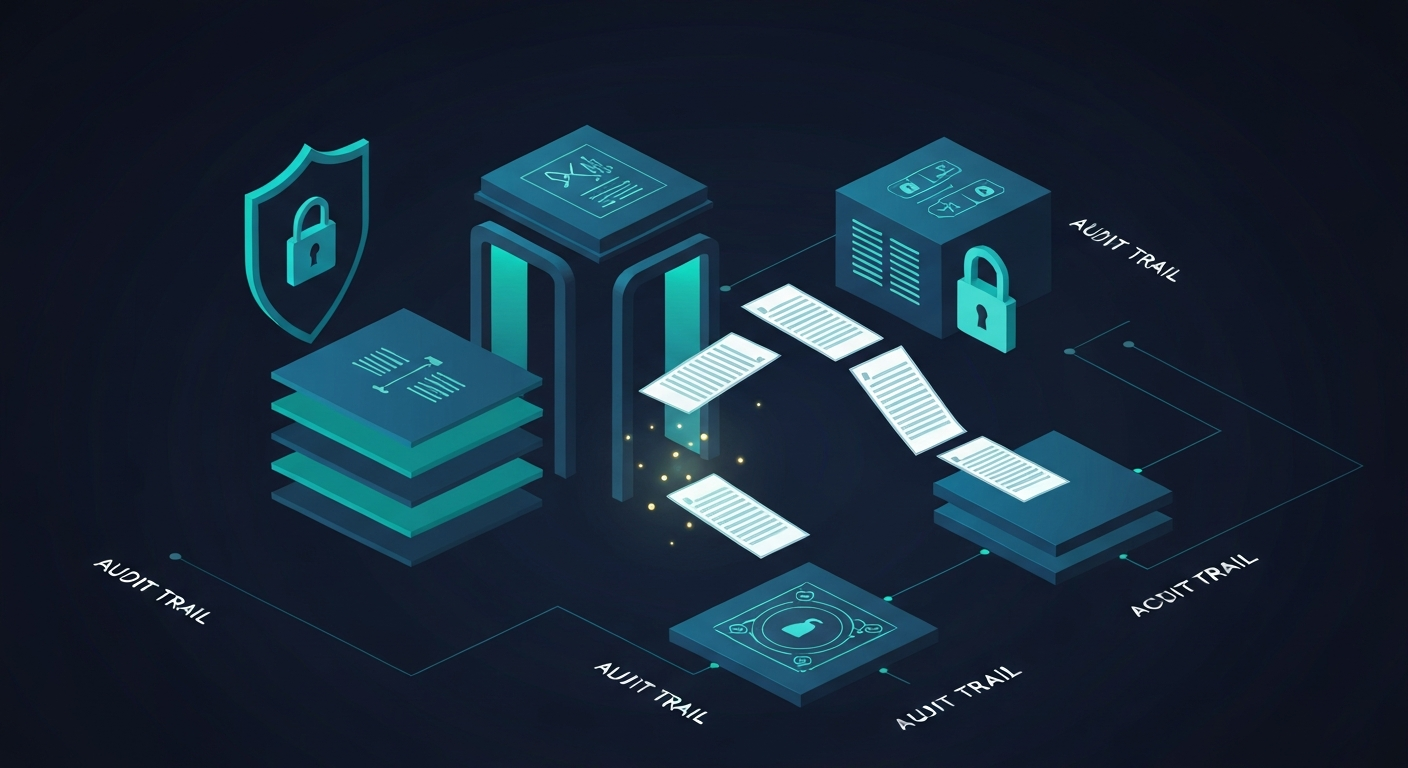
Audit logging at the retrieval layer. Every query, every set of returned chunks, every document that contributed to a generated answer gets logged with a timestamp and a user identifier. This is what makes your system auditable. It’s also what makes hallucination traceable.
BAA coverage for your vector infrastructure. If you’re using a managed vector database, you need a BAA with that vendor. Pinecone offers BAAs for enterprise tiers. Most smaller providers don’t, which means you either use pgvector inside your existing HIPAA-covered infrastructure or you take on significant compliance risk. We cover the full BAA landscape and what hospitals actually check for in our HIPAA compliance deep dive.
Retrieval-time access control. Before returning chunks to the LLM, your system needs to verify that the requesting user has authorization to see those records. This is not a vector database feature. It’s a layer you build on top of it, using your existing patient-provider relationship data to filter or re-rank retrieved results.
None of this is simple. All of it is necessary if you’re building clinical AI for hospital deployment.
The Deeper Problem
RAG in healthcare isn’t just a retrieval problem. It’s a trust problem.
When a clinician uses your AI, they’re making decisions that affect patients. If your system surfaces information from the wrong patient’s record, generates a confident answer based on a stale clinical note, or retrieves a document the clinician wasn’t authorized to see, you’ve broken the trust that clinical AI depends on. We wrote about what that trust breakdown actually costs when it happens during partner testing.
Hospital procurement teams understand this intuitively. That’s why the questions about your retrieval architecture are getting sharper. They’re not asking because they’ve read a compliance checklist. They’re asking because they’ve seen what happens when retrieval goes wrong in a clinical setting.
The teams building clinical AI who get this right aren’t just passing security reviews. They’re building products that clinicians actually trust. And in healthcare, that’s the only kind of product that survives.
The practical question to answer before your next hospital conversation
Can you trace exactly which source documents contributed to any answer your system has ever generated, who requested it, when, and whether they were authorized to see those records?
If the answer is no, your RAG pipeline is a compliance risk. Not a theoretical one. A real one that will show up the next time someone asks you to explain your retrieval architecture.
If you want to know specifically where your pipeline stands, that’s what an architecture review is for.