
Yesterday I posted about Mythos, the new class of Anthropic models.
Then I sat down and actually tested Fable inside Claude Code.
It blew my mind. And then it reminded me of something I have known for twenty years.
The problem was never writing the software.
Tell a capable engineer exactly what to build, and they build it. Twenty years ago that took a while. Then it got faster. Now an agent does it in minutes or hours.
But look at what did not change.
You still have to tell it what you want. In detail. With the sequence right. With the pitfalls flagged before they bite, the compliance baked in, and the data structured the way it actually needs to be structured and not the way it happens to come out.
The typing got fast. The thinking did not get easier.
So here is the part that matters if you are building in healthcare.
We have been building a HIPAA tool for teams that ship with AI coding agents. Months of work. We outlined dozens of sprints. Hundreds of user stories, defined so well a product manager would get jealous. Acceptance criteria, edge cases, data flows, the whole thing.
We have been coding it with Claude Code on Opus 4.8 for weeks. It went great. Real back and forth. The agent would run for an hour or two, come back, and we would test and adjust. Normal rhythm. Good rhythm.
Then we handed Fable the entire sprint.
A day and a half later it was done.
The same work Opus 4.8 had been chewing through for several weeks. With a couple of pit stops, mostly because I ran out of credits, which is its own special kind of humbling. Nothing says “the future is here” like the future telling you your balance is zero.
Now here is the number I am about to make up.
Ten times. Roughly ten times the output.
I have no clean way to measure that. I pulled it out of thin air. But it felt at least that big, and I have been doing this long enough to know the difference between fast and actually shipped.
And here is why it worked. It is the same reason it would have worked twenty years ago with a room full of engineers.
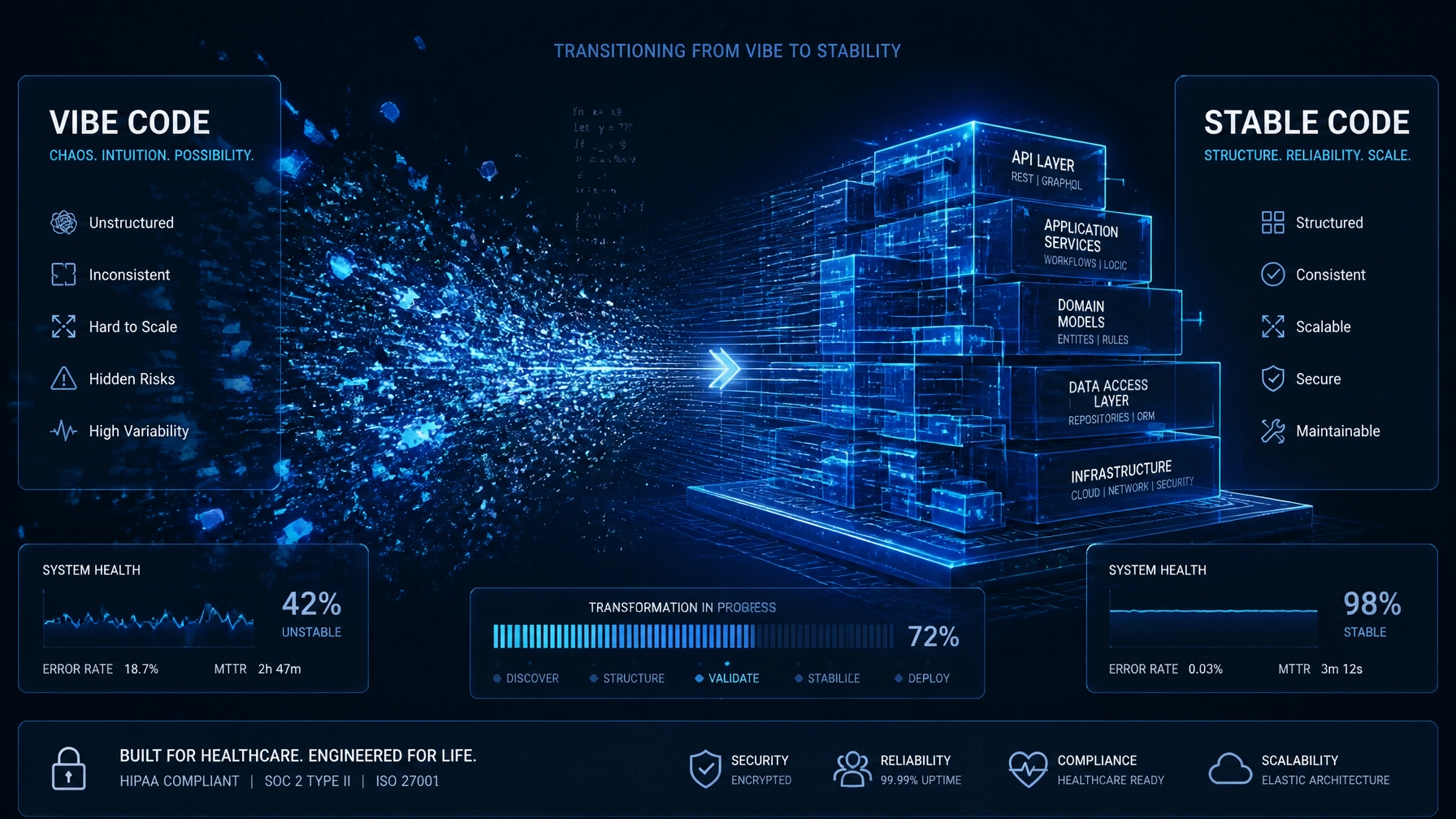
We did not just hand it a prompt. We handed it structure. Every story defined. The right sequence, because in healthcare you cannot build the AI layer before you have the data model right, and you cannot get the data model right without knowing what the audit is going to ask for two years from now. We called out the known traps before the agent could fall into them. And we gave it real tools to work with. Sample repositories to test against. The Notion API for the spec. The Fathom API to pull feedback from recorded sessions with actual users. We consolidated all of it into one clean package and pointed the agent at it.
Garbage in, garbage out. That rule did not retire. It just got faster.
Hand a powerful agent a vague idea and you get a beautiful, confident, broken mess in record time. Hand it expert level structure and you get a day and a half that replaces a month.
The leverage was never the tool. The leverage is the expertise sitting behind the prompt.
This is exactly why I am not nervous about AI in our line of work. I am the opposite of nervous.
In healthcare the cost of fast and wrong is not a bad sprint. It is a compliance hole you find during due diligence. A data model you have to unwind six months in. An AI feature your clinicians quietly stop trusting because it cannot show its work. Speed without expertise is just a faster way to build the wrong thing, and then you get to rebuild it with even less runway than you had before.
So if you are building in healthcare and your runway is shorter than your roadmap, the move is not a tool you hope figures it out on its own. And it is not a consultant who shows up, hands you a deck, and disappears.
You want someone who has spent 25 years building this exact kind of software, who already knows the sequence and the traps, and who shows up with a team that starts shipping. Not slides. Working code. The kind that survives an audit.
The agents are incredible. I use them every single day now. But they amplify whatever you give them. Give them real expertise and they fly. Give them guesswork and they crash, faster than ever.
If your runway is running out and you have real software to build, let’s talk. I will bring the structure. The agents and the team will bring the speed.
P.S. Still a little salty about those credits.